School for Anxiety – Small, Supportive Florida Private HS
For many adolescents, the school environment isn’t just stressful – it’s overwhelming. Crowded hallways, rigid schedules, and constant social pressures can turn learning into a daily source of anxiety.
At Xceed, we meet many families whose teens are struggling with anxiety in traditional schools. Parents describe mornings filled with dread, afternoons of exhaustion, and evenings lost to catch-up homework. For these families, the stress isn’t about lack of ability – it’s about environments that make it difficult for students to thrive.
That’s why we built something different: small, supportive campuses across South Florida designed to reduce triggers, foster confidence, and help high school students find balance.
At Xceed Preparatory Academy, we believe no student should struggle silently. Unlike traditional schools where struggling readers can slip through the cracks, we keep our daily headcount below 75. This deliberate structure allows teachers to identify difficulties in real time and give immediate feedback. The result is that students who once avoided reading aloud gain the confidence to participate fully in class.
For parents searching for a private school that truly changes a child’s trajectory, Xceed offers an environment where learning differences are addressed with compassion and expertise.
Why Traditional Schools Can Raise Anxiety – And What Parents Can Do
Every student who enrolls at Xceed begins with a four-step personalized learning plan (PLP) designed to target individual strengths and challenges. For a dyslexic student, the PLP may include extended reading blocks, structured phonics support, or integration of assistive technology. Our goal is to build literacy and comprehension strategies from day one rather than waiting for problems to accumulate.
This process is particularly meaningful because nine out of ten families who tour Xceed disclose a learning difference during their admissions interview. Many share stories of students who lost confidence or disengaged in traditional classrooms. By starting with a PLP, we map out tailored supports, so academic recovery begins immediately.
Our teachers – who are certified by the Florida Department of Education – are skilled in adapting material for students with learning disabilities. Their expertise in special education methods translates into practical strategies that improve outcomes and restore motivation.
Our accountability model also balances independence with structure. Students are expected to attend roughly 25 hours per week on campus, with built-in flexibility for outside commitments. If progress slips and grades fall below a C, our teachers intervene quickly with extra checkpoints. This approach prevents dyslexic students from falling behind and helps them maintain momentum throughout the semester.
For a deeper look at how our strategies guide reading and confidence, we invite you to explore our resource on managing dyslexia and becoming a well-rounded student.

What a School for Anxiety Should Offer – Checklist for Parents
When parents look at schools for anxiety, it’s critical to find a learning environment that teaches coping skills alongside academics. A strong program isn’t just about quiet classrooms – it’s about balancing flexibility with accountability.
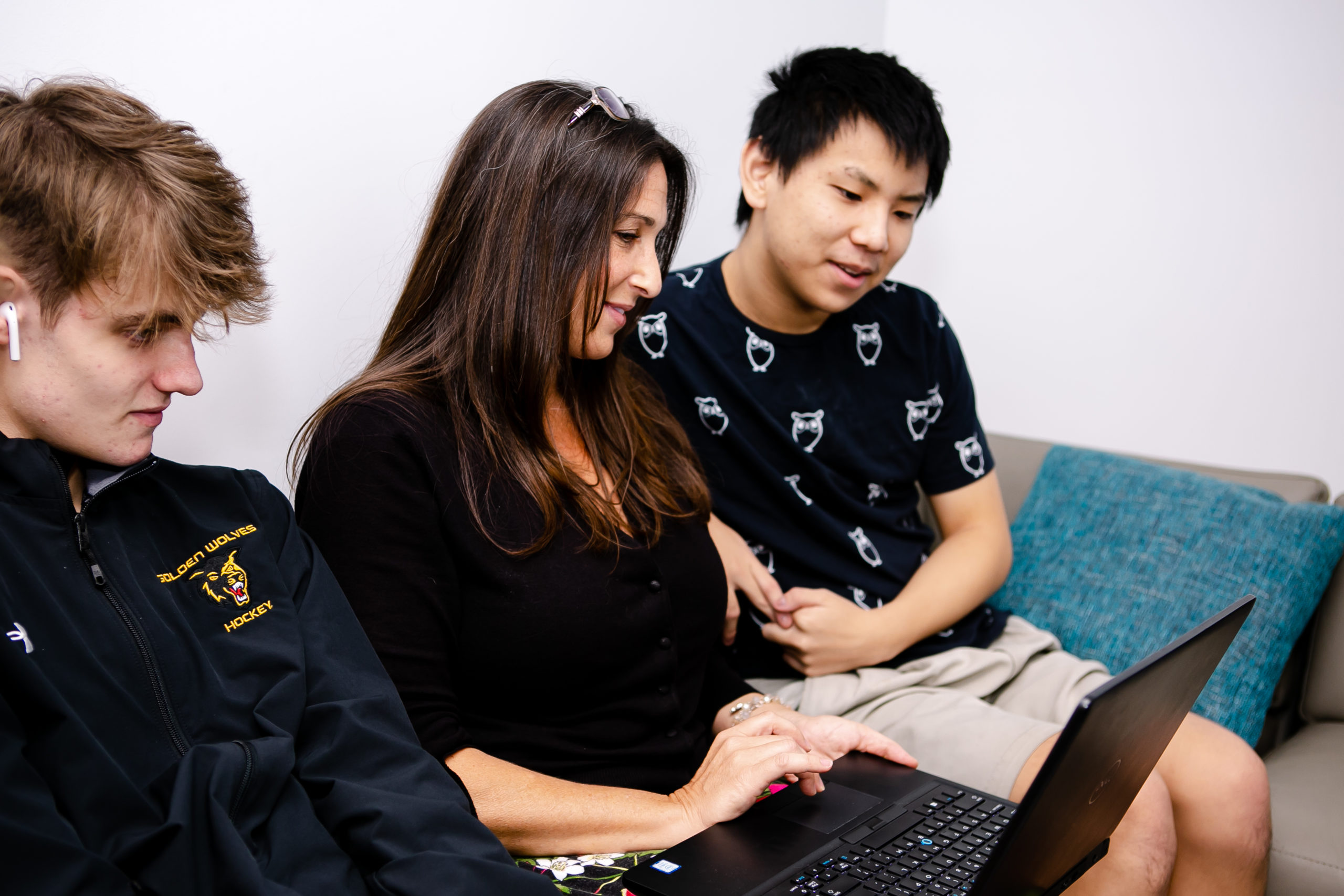
That’s why we use pacing guides so that our students progress consistently, and teachers are available every school day for one-on-one support. That access helps anxious students build confidence without feeling abandoned to “figure it out” alone. Parents often tell us that this blend of structure and flexibility is what drew them to us.
On a tour, families should ask questions such as:
By asking directly, parents gain insight into how our private school will balance academic performance with mental health needs.
How Xceed’s Small, Safe Campuses Calm School Anxiety
Anxiety symptoms often spike in environments where children feel unsafe or anonymous. That’s why every one of our campuses is intentionally small and designed for calm. Students don’t get lost in hallways, and teachers know their names from day one.
Coral Springs families often cite the “safer, more supportive environment” they feel on campus. This is especially meaningful in Broward County, where the memory of Parkland still impacts many households. Parents say the difference in atmosphere alone has lowered their child’s anxiety.
At Weston, shy students describe gradually building confidence through small group sessions and supportive routines. By lowering environmental stress, we give students room to practice coping strategies. That shift builds trust – not just with teachers but with peers – which is crucial for reducing school anxiety over time.
Structured Flexibility: Personalized Schedule Planning Without the Panic
Many families find us after their child struggled with the one-size-fits-all demands of traditional high school. A student managing social anxiety may need a later start time, or a student balancing therapy appointments may need a mid-morning break.
Our personalized schedule planning addresses these realities without sacrificing progress. Students typically spend about 25 hours per week on campus, with flexibility to adjust when necessary. Teachers carefully track pacing guides to keep students within two weeks of expected progress. If a grade dips below C, interventions happen right away.
For some students, structure without rigidity feels like breathing room. And when high anxiety flares mid-semester, our team adapts schedules while maintaining accountability – so anxious students stay on track academically while regaining stability.
Tuition, Scholarships & Next Steps Toward a Calmer High School Experience
Cost is part of any parent’s decision. Our tuition sits mid-range among Florida private schools. We work closely with families to identify scholarships to offset tuition, especially those designed to support mental health needs. In fact, many families explore various need-based aid options during their campus tours, and about 80% use it to make enrollment possible.
Because we offer rolling admissions, transfers can happen mid-year. An anxious student doesn’t have to wait months for relief – they can begin classes in as little as one week. During onboarding, students and parents build a personalized schedule together. Three weeks later, we revisit the plan to adjust pacing and routines. That cycle helps new students settle in with minimal stress.
Families often tell us that walking into one of our campuses feels like a weight lifted – it’s calmer, quieter, and more personal.
If your teen is struggling with school anxiety, we offer a calm, structured, and supportive path forward. We’re here to help students grow not only academically but emotionally, preparing them for success in college and beyond.
Are you looking to apply or explore their options?
The next steps are simple: you can schedule a tour, ask about financial aid, or request more information.