
Why Ed-Tech Matters in 2025 (49-Point Learning Gain)
In 2025, the question isn’t whether classrooms use technology – it’s how wisely they do. While some schools chase the next shiny app or platform, others are using research-backed strategies to amplify learning without overwhelming students. The difference comes down to precision: small, intentional doses of tech – delivered with purpose – are producing measurable results. And in today’s data-driven world, that kind of clarity matters more than ever.
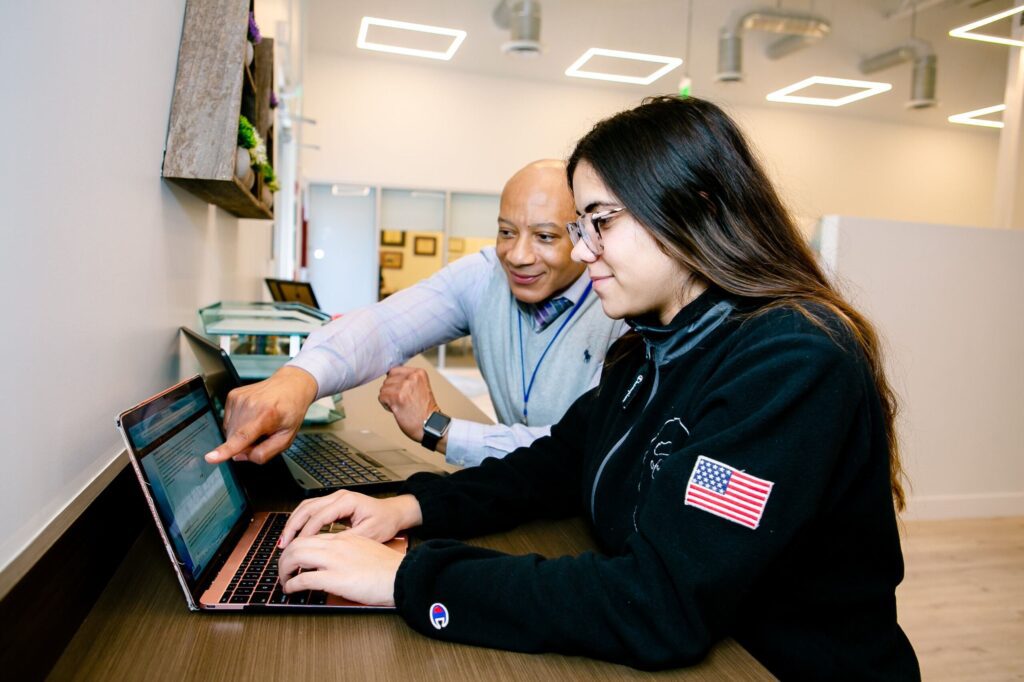
At Xceed Preparatory Academy, we’ve seen firsthand how smart, targeted tech integration can elevate the student experience. But we don’t rely on assumptions. Research from global education bodies and national surveys consistently reveals that limited, purpose-driven technology use leads to meaningful academic improvements.
Let’s break down some of the most pressing questions parents, teachers, and students are asking about the learning process in a tech-forward classroom:
Does Classroom Tech Really Boost Test Scores?
Absolutely – when used strategically. The OECD PISA 2022 report found that students who limited device use to one hour per day scored 49 points higher in math than peers spending five to seven hours. That stark difference highlights the importance of balance and intentionality.
The top performers weren’t using more tech – they were using it better, with guidance and clear learning goals.
See Xceed’s Tech Ecosystem below for real-world examples.
How Much Screen Time Is “Just Right” for Learning?
Less can lead to more. Students showed the highest academic performance with under an hour of screen use per day, according to the OECD. Beyond that point, benefits dropped off sharply, and focus became harder to maintain.
This demonstrates that technology should complement instruction, not dominate it. When screen time is structured and purposeful, students retain more and perform better.
See Xceed’s Tech Ecosystem below for real-world examples.
What Tech Benefits Do Parents Care About Most?
For families, the top priority is simple: tools that support student success – without causing burnout. They want their child to be engaged, progressing, and prepared for the future.
Parents are especially drawn to real-time dashboards, secure platforms, and interactive assignments that match different learning styles. These features allow for better communication, clearer goals, and stronger partnerships between home and school.
See Xceed’s Tech Ecosystem below for real-world examples.
Why the Right Use of Technology Works
Across multiple studies, one message remains consistent: digital tools elevate performance when integrated intentionally. That said, these tools must be curated, focused, and aligned with a student’s goals – not simply used to fill time.
A 2024 EdWeek–Harris survey backs this up: 87% of students and teachers said digital platforms are essential for personalizing content. For families asking, how does technology enhance student learning, the answer is clear – it helps make content relevant, adaptive, and accessible.
But that benefit depends on structure. At Xceed, screen time is guided by the teacher, not the clock. And that structure yields more than engagement – it translates into student success.
Research Snapshot – Blended & Active Learning
(d = 0.30)
Blended learning isn’t hype – it’s proven. A 2024 Frontiers in Education meta-analysis covering 27 studies found that blended instruction improves performance by 0.30 standard deviations, equivalent to three to four months of academic growth. That’s a substantial gain, particularly for students navigating unique learning challenges.
Two major strengths drive this growth:
- Higher student engagement, since lessons are flexible and interactive
- Better pacing, allowing students to revisit tough content or accelerate when ready
The only trade-off? It takes extra planning from educators to implement. But with results like these, our team is more than willing to make the investment.
A separate meta-analysis of 225 STEM courses found that active learning – where students interact with material through discussion, design, and experimentation – reduced failure rates to 21%. When the learning experience is participatory, the learning sticks.
Xceed’s Tech Ecosystem – Startup-Style Campuses
Think Starbucks-meets-SpaceX: at Xceed, our learning spaces look more like modern startups than traditional classrooms. No rows of desks. No chalkboards. Instead, you’ll find flexible seating, natural light, and students actively engaging with content using the latest digital tools.
Every campus leverages an interactive curriculum provided by a top-tier education platform. With 24/7 remote access, students can work during travel, sports seasons, or at home without missing momentum. Each student learning journey is unique, so flexibility is key.
Our personalized learning plan (PLP) dashboard helps track every student’s academic growth. Teachers monitor mastery levels and can tailor lessons in real time. Parents gain peace of mind by accessing the dashboard at any moment to check progress and upcoming goals.
Our technology enhanced learning model even incorporates immersive tools: holographic presentations, virtual lab simulations, and real-world data streams. Weston and Boca campuses showcase these every day.
Pros: anytime access, meaningful feedback, flexible pacing
Cons: requires internet access at home (which we help support)
Real-World Tech Projects That Build Skills
Our hands-on projects go far beyond the typical group poster or slideshow. Students use industry-grade tools to tackle problems that matter.
| Project | Tech Skill | Campus & Source |
| NASA Lunar Growth Chamber | IoT sensors & data analytics | Coral Springs (HOS) |
| SECME “Bionic Hand” | 3-D design & robotics | Coral Springs (HOS) |
| Logic League Coding Club | Full-stack development & AI prompts | Weston (HOS) |
These are more than school assignments – they’re incubators for future careers in engineering, medicine, and computer science. Students collaborate, code, build, and test – learning technical skills while developing soft skills like resilience, teamwork, and creative thinking.
Balancing Benefits & Risks (Mini Pros/Cons)
Xceed takes tech seriously – and strategically. Classroom smartphones are restricted to learning platforms. Social media apps? Off during school hours. Teachers even model “notification-off” habits to reduce distractions.
This policy is backed by data. The OECD reports that unchecked digital distractions can reduce academic performance by up to three-quarters of a school year. Our guided approach keeps focus intact while still allowing for exploration and innovation.
We also listen to student feedback. When screen time starts to feel excessive, teachers pivot – opting for print materials, hands-on projects, or team-based discussion. The goal is to create a tech-balanced learning process that sharpens minds without tiring them out.
Pros:
- Adaptive pacing for diverse learning styles
- Instant feedback for faster course corrections
- Equity for traveling athletes and remote learners
- Structure that supports student engagement and self-management
Cons:
- Possible screen fatigue – reduced through our 4-hour on-campus schedule and built-in outdoor movement breaks
- Occasional connectivity issues at home – mitigated by flexible scheduling and offline options
Want to see how this balance works in real classrooms? See Teacher Training next for enforcement details.
Teacher Training & Support (100% Florida-Certified)
Our teachers don’t just use tech – they understand it. Every one of our educators completes an annual micro-credential through ISTE or CoSN, covering topics like AI ethics, data privacy, and digital wellness.
As Weston’s Head of School notes, “We meet monthly to test new tools and share wins across campuses.” These peer-driven sessions fuel ongoing growth and help instructors deliver a future-ready experience in every class.
Our educators are empowered to adapt lessons on the fly, troubleshoot technical issues, and make smart, informed choices about digital integration. They’re also encouraged to personalize the learning experience using tech tools aligned with each student’s strengths and learning styles.
We don’t view training as a one-and-done task – it’s a continuous learning process. Teachers experiment, evaluate, and evolve alongside their students, all while staying anchored in educational best practices.
Faculty also collaborate across campuses to pilot new platforms before full rollout, reducing friction and boosting adoption success. From mastering interactive dashboards to modeling mindful device use, our educators are leading with intention.
See Outcomes section for student impact.
Measurable Outcomes – Engagement, Grades, Confidence
Here’s the headline: after implementing our PLP dashboard, middle school math mastery scores rose 12% at our Fort Lauderdale campus. That kind of improvement reflects the power of consistent data use, guided instruction, and student-driven pacing – which you can see for yourself with a private tour.
But mastery isn’t the only measure. A 95% re-enrollment rate speaks volumes about parent satisfaction and trust. It tells us that families see the results – not just in report cards, but in confidence, self-direction, and long-term growth.
We also see improvements in student engagement, especially among learners who previously struggled to stay motivated in traditional settings. With personalized learning paths and real-time feedback, students feel more in control of their progress and more connected to their goals.
Our teachers report stronger participation in discussions, more willingness to ask questions, and an uptick in independent project submissions – all signs that the learning process is taking root. And when students feel confident in their growth, that success carries into other subjects, social-emotional development, and future planning – no matter if that involves higher education, entrepreneurial, or anything in between.
This is where educational technology meets real-world impact. We’re not just using technology for its own sake. We’re using it to drive meaningful learning outcomes for every student.
Interested in hearing directly from families? Read their stories in our testimonials.
Next Steps – Tour Xceed’s Tech-Powered Classroom
The best way to understand the Xceed model is to experience it. That’s why we invite families to take a private tour or schedule a student shadow day. During your visit, you’ll walk through four checkpoints that highlight our innovation in action:
- Observe a live interactive lesson
- Explore the digital PLP dashboard
- Watch a student-led tech project in action
- Review tuition and scholarship options
From tech-enabled instruction to supportive mentoring, Xceed delivers what today’s students need to thrive. Whether you’re comparing public school vs. private school or looking for a more personalized learning experience, our campuses offer a better way to learn.
Visit us to see how personalized learning, digital integration, and real-world application all come together to support your child’s journey. Schedule a private tour or book a shadow day today.