
4 Collaborative Learning Benefits for Students: A Guide
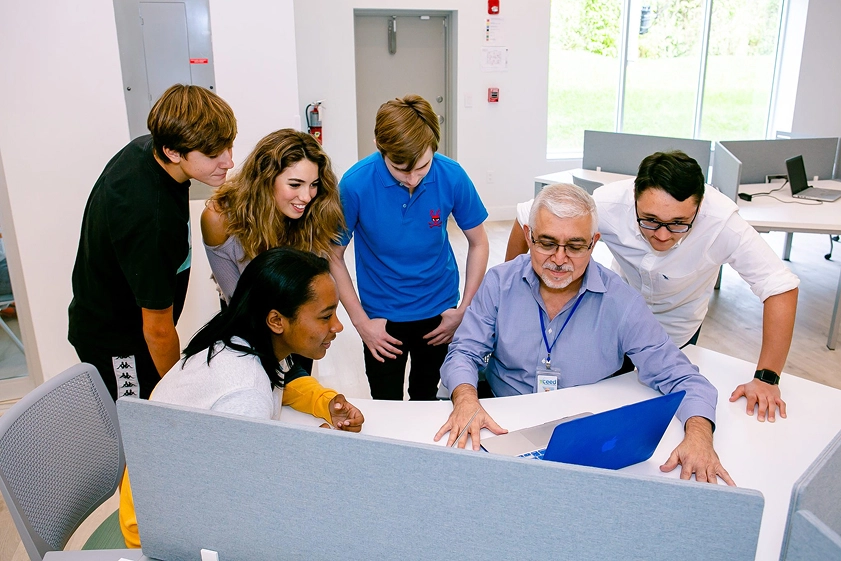
When parents hear the phrase "collaborative learning,” they sometimes picture a typical classroom project where one student does most of the work while everyone else watches. But true collaborative learning is very different from basic group work.
Cornell University’s Center for Teaching Innovation defines it as active, student-centered learning grounded in peer instruction and team-based learning.
At its core, collaborative learning is a structured, research-backed teaching approach where students build understanding together through discussion, shared problem-solving, and peer teaching. Instead of passively receiving information, students actively participate in the learning process.
What Collaborative Learning Actually Means for Middle and High School Students
For middle and high school students, this approach works especially well because they are moving from teacher-led instruction toward independent thinking. They are no longer simply memorizing facts. They are learning how to analyze, explain, and apply ideas.
This is why strong schools balance direct instruction, independent practice, and collaborative learning instead of relying on only one style. Teachers still introduce concepts directly. Students still complete independent assignments. But collaborative discussion gives students a place to test understanding before they are expected to master ideas alone.
At Xceed Preparatory Academy, collaborative learning happens daily because small-cohort classrooms naturally support discussion. Students regularly engage in shared analysis, peer discussion, and collaborative problem-solving instead of waiting for occasional project days.
The teacher’s role changes, too. Instead of lecturing for an entire class period, teachers guide discussions, ask questions, and ensure every student contributes. That structure is what transforms conversation into meaningful learning.
The Research Behind Why Collaborative Learning Works
The research supporting collaborative learning is extensive. Cornell University builds faculty development around collaborative learning because research shows improvements in persistence, engagement, and classroom community.
The National Education Association highlights collaborative learning benefits that go beyond academics. They say it’s also a way to develop higher-level thinking skills and social-emotional growth simultaneously.
Research also shows that collaborative learning enhances long-term retention. Explaining a concept to another person forces students to organize their thinking clearly. That process strengthens memory and understanding more effectively than rereading notes.
At Cognia-accredited schools like Xceed, collaborative instruction is built into classroom expectations and instructional standards. Families touring schools can ask directly how collaborative learning is used because it is considered a meaningful indicator of instructional quality.
4 Benefits of Collaborative Learning for Middle and High Schoolers
Here are the four major benefits of collaborative learning for middle and high school students:
1. Academic Depth and Understanding
One of the biggest collaborative learning benefits is deeper critical thinking.
When students explain concepts to classmates, ask questions, or defend their reasoning, they process information more deeply.
This is especially valuable in STEM, writing, and discussion-based humanities courses. A student may think they understand a concept until they try teaching it to someone else. That moment of explanation becomes a powerful learning experience.
2. Better Communication and Social Skills
Middle and high school students need more than academic knowledge. They also need strong communication abilities and healthy social skills.
Structured collaboration gives students regular opportunities to speak clearly, listen carefully, and revise ideas together. Those are experiences independent worksheets cannot provide.
Students also gain exposure to diverse perspectives, helping them develop flexibility and empathy.
3. Greater Confidence and Engagement
Many students become more invested in class when they know their ideas matter.
This is one reason student engagement often rises during collaborative instruction. Students feel responsible not only for their own progress but also for the success of their team.
Quiet students frequently benefit, too. Speaking in small groups feels safer than speaking in front of an entire classroom. Over time, active participation becomes more natural, a skill they can build on.
This kind of active learning encourages students to participate instead of simply observe.
4. Accountability and Real-World Readiness
Strong collaborative learning also builds responsibility.
Students learn to manage deadlines, contribute consistently, and complete shared deliverables. These experiences mirror what students encounter in college courses and professional environments.
At Xceed, these benefits are amplified by small-cohort classrooms where teachers know students personally and can monitor participation closely.
Why Small Class Sizes Make Collaborative Learning Work Better
Class size directly affects the quality of collaborative learning.
In a classroom with 30 students, a teacher may supervise six or seven different groups at once. That makes it difficult to observe every discussion or ensure balanced participation.
In smaller classrooms, teachers can actively facilitate every conversation.
This difference matters. Tennessee’s Project STAR research found that students in classes of 13–17 consistently outperformed peers in larger classes of 22–26 students.
At Xceed, teachers can circulate through every collaborative table during a single class period. They can ask questions, clarify confusion, and encourage quieter students to contribute. That level of facilitation is much harder in overcrowded classrooms.
Large public schools can still use collaborative learning effectively, but larger class sizes often require more scripted systems because teachers cannot monitor every conversation in real time.
This is one reason many families researching the benefits of smaller class sizes also ask about collaborative instruction.
Collaborative Learning Strategies Every Great Classroom Uses
Great teachers do not simply tell students to “work together.” They use structured collaborative learning activities designed to promote accountability and understanding. Here are just a few common examples:
Think-Pair-Share
Students first think independently about a question, then discuss answers with a partner before sharing ideas with the class. This gives every student time to process ideas before public discussion.
Peer Instruction
Students answer conceptual questions independently, discuss answers with classmates, then revisit their thinking after discussion.
The Jigsaw Method
This strategy builds both accountability and peer teaching. Each student becomes an expert on one portion of a larger topic before teaching it to the rest of the group.
Problem-Based Learning
In problem-based learning, students solve open-ended challenges through research and shared problem-solving. Cornell’s Center for Teaching Innovation identifies this strategy as a core collaborative learning method because it encourages long-term accountability and discussion-driven understanding.
At Xceed, collaborative strategies are matched carefully to subject areas. Science labs use collaborative experimentation. History seminars rely on discussion. Math courses use shared problem-solving. AP and dual enrollment courses regularly incorporate teamwork and discussion-based instruction.
How Collaborative Learning Supports Different Learner Types
Strong collaborative learning environments support many kinds of learners.
For neurodivergent students, structured collaboration can reduce the pressure of fully independent assignments. Students with ADHD, dyslexia, autism, or executive functioning challenges often benefit from shared accountability and clearly defined roles.
Xceed’s ESE/SPED services and executive functioning support help make collaborative learning accessible for students with 504 plans or IEPs.
ESL and international learners also benefit significantly. Collaborative discussion provides natural language immersion. Students hear classmates explain concepts in multiple ways, then practice responding themselves. That repeated peer interaction builds confidence and language fluency.
Student athletes and performers with demanding schedules often benefit from collaborative accountability as well. Missing work affects teammates, not just the individual student.
This is especially valuable in schools that already emphasize personalized learning in education, because collaborative instruction can still be tailored to different student strengths.
From Classroom Collaboration to College and Career Readiness
Colleges increasingly expect students to know how to work collaboratively.
STEM labs, humanities seminars, business projects, and research teams all rely heavily on discussion and shared analysis. Students who practice collaborative learning in high school arrive more prepared to contribute confidently.
The National Education Association specifically identifies teamwork, communication, and collaborative problem-solving as valuable workforce competencies.
At Xceed, students build these experiences early. Monthly college counseling beginning in 9th grade helps students translate leadership roles, project work, and collaborative accomplishments into essays, interviews, and résumés.
Xceed alumni have attended schools including Columbia, Pepperdine, Purdue, Howard, Loyola Marymount, and the University of Miami. Those environments already rely heavily on discussion-based instruction and teamwork.
Students who are comfortable contributing ideas, solving problems together, and managing shared responsibilities often transition more smoothly into college academics and professional environments.
What Parents Ask About Collaborative Learning (FAQ)
What if my child is shy or introverted?
Many shy students actually prefer small-group discussion to speaking in front of an entire classroom. Structured roles help participation feel manageable.
Is grading fair if students work together?
Strong classrooms assess both individual contributions and group outcomes. Teachers often use rubrics, checkpoints, and peer feedback to maintain accountability.
Does collaborative instruction reduce rigor?
Not at all. Rigorous learning can absolutely happen through discussion and shared problem-solving. Xceed’s AP, honors, dual enrollment, and NCAA-approved courses demonstrate that academic rigor and collaborative learning can coexist successfully.
Won’t one student do all the work?
This concern is real, but good structure prevents it. Clear expectations, defined responsibilities, and regular teacher monitoring reduce the “free-rider” problem significantly.
What to Look for in a School That Practices Real Collaborative Learning
If a school claims to prioritize collaborative learning, ask to observe an actual class.
Watch how students are seated. Notice whether discussion feels natural. Pay attention to whether the teacher moves actively between groups or stays mostly at the front of the room.
Ask direct questions:
- How are collaborative assignments graded?
- What role does the teacher play during discussion?
- Can you share examples of recent collaborative learning activities?
- How does technology in the classroom support discussion and shared problem-solving rather than replacing human interaction?
Be cautious of schools that describe collaboration vaguely without explaining structure. Real collaborative learning requires intentional facilitation, not simply placing students together during a group activity.
At Xceed Prep, collaborative instruction is tied closely to personalized advising, academic planning, and everyday classroom culture. Students are not rotating randomly through disconnected activities. Their learning is connected to long-term academic and personal growth.