
One-on-One Teaching Strategies That Improve Student Outcomes
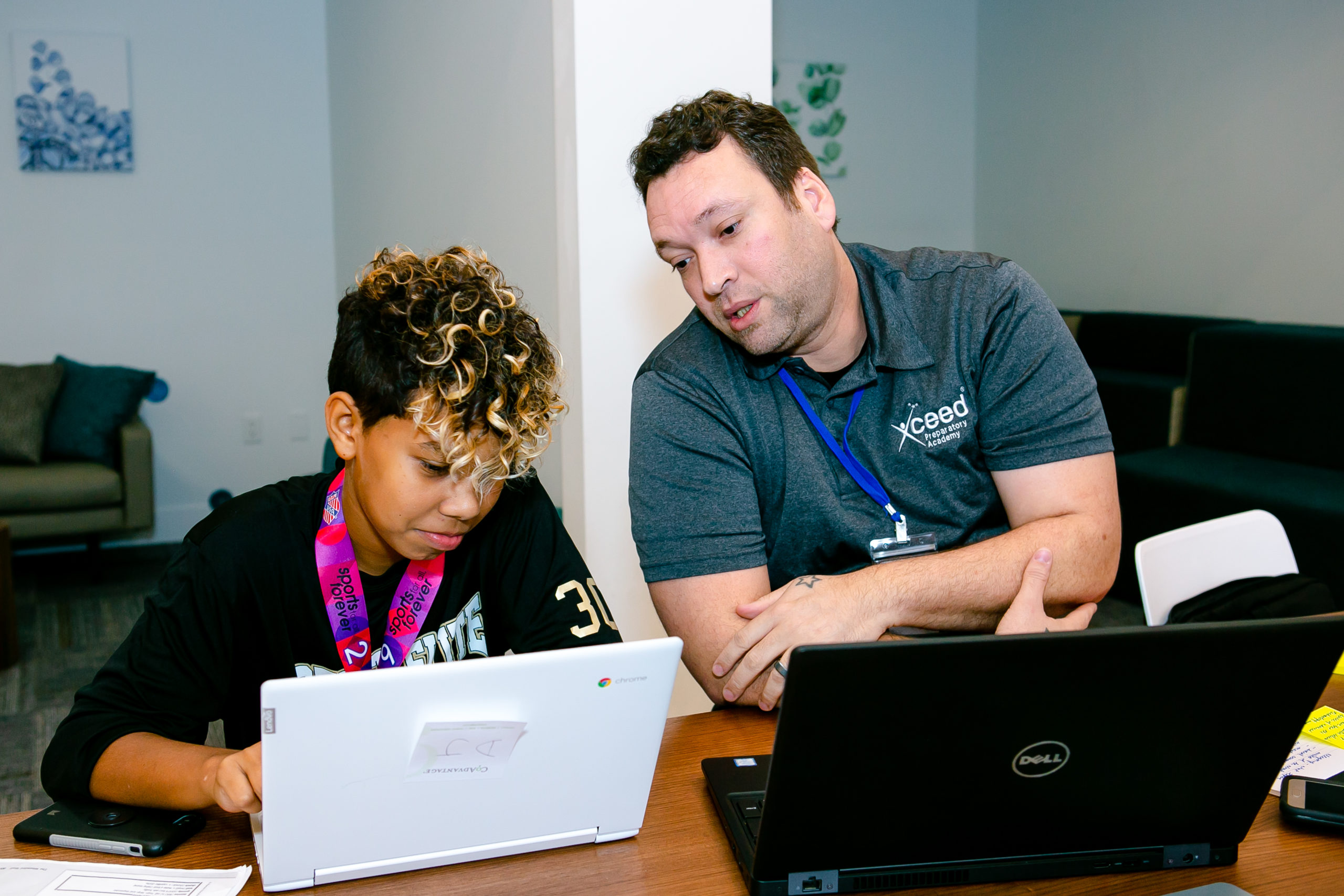
What “One-on-One Teaching Strategies” Actually Mean (and Why Families Should Care)
When educators discuss one-on-one teaching strategies, they are referring to the intentional methods a teacher uses to deliver instruction tailored to an individual learner.
A one-on-one teaching strategy involves how a teacher plans a lesson, asks questions, provides feedback, assesses understanding, and adjusts instruction based on a student’s progress. Every aspect of the learning experience is designed around the needs of a particular student.
This differs significantly from traditional group instruction. In a classroom of 25 or 30 students, instruction is often delivered to the group as a whole. Questions, pacing, and assessment are necessarily generalized. Teachers work hard to reach every student, but practical limitations exist.
With one-on-one teaching strategies, every adjustment is made with a specific learner in mind. The pace can change immediately. Explanations can be reframed. Additional practice can be introduced when needed. More advanced material can be provided when a student is ready.
At Xceed’s South Florida campuses, students benefit from an environment where teachers know them personally and can adapt instruction accordingly. The result is a college-preparatory experience that feels individualized rather than standardized.
Why One-on-One Teaching Outperforms the Cookie-Cutter Classroom
Every classroom contains a wide range of learners.
Some students grasp new concepts immediately. Others need additional explanation and reinforcement. Some thrive through active learning activities, while others prefer direct instruction or structured practice.
In large classrooms, students who struggle may quietly fall behind. Students who master material quickly may become disengaged because they are not sufficiently challenged.
One of the biggest advantages of one-on-one teaching strategies is their ability to reach students who might otherwise get lost in the middle.
Research consistently shows that small classrooms and personalized learning boost engagement.
Smaller classrooms contribute to stronger student engagement, higher motivation, lower anxiety, and increased classroom participation. Students are often more willing to ask questions, make mistakes, and take academic risks when they feel supported by a teacher who knows them well.
Parents often notice confidence improvements before they notice grade improvements.
A student who once avoided participation may begin volunteering answers. A reluctant writer may become more willing to revise assignments. A student who previously viewed themselves as “bad at math” may begin approaching challenges with greater confidence.
For students with learning differences, individualized instruction can be especially powerful. Teachers can modify explanations, adjust pacing, provide scaffolding, and accommodate different learning styles in real time.
At Xceed, personalized learning is not an occasional intervention. It is the foundation of the educational experience.
The 7 Most Effective One-on-One Teaching Strategies
Effective one-on-one teaching does not happen by accident. Skilled educators use proven strategies to support student learning and long-term growth.
1. Establish Clear Learning Objectives
Every lesson should begin with a clear understanding of success.
When students know what they are expected to learn and why it matters, they are more likely to remain engaged and take ownership of their progress.
Clear objectives also help teachers monitor understanding throughout instruction.
2. Ask Open-Ended Questions
Open-ended questions encourage higher-order thinking.
Rather than asking students to recall information, teachers challenge learners to analyze, evaluate, synthesize, and apply concepts.
Questions such as “Why do you think this happened?” or “How would you solve this differently?” promote deeper learning and stronger critical-thinking skills.
3. Provide Immediate Feedback
Feedback is one of the most powerful influences on student achievement.
In effective one-on-one teaching strategies, feedback is specific, timely, and actionable. Students do not wait days or weeks to discover misunderstandings.
Instead, a teacher can address challenges immediately and reinforce positive habits while learning is taking place.
4. Use Scaffolding
Scaffolding is an instructional approach based on the work of psychologist Lev Vygotsky, who found that students learn complex skills more effectively when support is provided in manageable stages.
As confidence grows, the teacher gradually removes support and encourages greater independence.
This teaching strategy helps students build competence without becoming overwhelmed.
5. Encourage Reflection and Self-Assessment
Strong learners understand their own strengths and areas for improvement.
Teachers can promote growth by asking students to evaluate their progress, identify challenges, and develop strategies for future success.
Self-reflection builds independence and self-advocacy skills that extend beyond the classroom.
6. Connect Learning to Student Interests
Personalized learning becomes more meaningful when instruction reflects a student’s interests and goals.
A future engineer may analyze engineering case studies. An aspiring writer may study published essays. A student interested in business may explore real-world economic examples.
These authentic learning opportunities increase engagement and make lessons more relevant.
7. Use Adaptive Learning Technology
Modern educational technology can enhance one-on-one teaching strategies.
Adaptive learning platforms adjust difficulty levels based on performance, provide targeted feedback, and help teachers identify gaps in understanding.
Technology does not replace great teaching. Instead, it gives teachers additional tools to personalize instruction and improve student learning outcomes.
Personalized Lesson Plans: How Teachers Build Learning Around the Student
A truly personalized lesson begins with understanding what a student already knows.
Teachers conduct informal assessments, review previous performance, and identify strengths, interests, and challenges before instruction begins.
From there, lesson plans can be adjusted to reflect the student’s learning style, academic goals, and individual needs.
At Xceed, this process extends beyond a single class.
Personalized schedule planning brings together teachers, school leadership, college counselors, and families to create an educational experience aligned with each student’s aspirations.
Whether a student is pursuing advanced academics, athletics, performing arts, or a specialized career pathway, instruction is designed to support those goals.
The ultimate measure of personalization is simple: does the student’s daily experience actually change based on who they are?
At Xceed, the answer is yes.
How Small Class Sizes Make One-on-One Teaching Strategies Possible
Many schools promote individualized instruction. The reality is that class size often determines whether that promise can be fulfilled.
One-on-one teaching strategies require teacher attention.
A teacher cannot consistently provide personalized feedback, monitor understanding, adjust pacing, and build meaningful relationships with every student in a classroom of 30 learners.
In smaller classrooms, teachers can move freely between students, provide immediate support, and modify instruction based on what they observe throughout a lesson.
This creates opportunities for active learning, discussion, reflection, and meaningful engagement.
At Xceed, classes are intentionally designed to be right-sized rather than overcrowded.
The goal is not exclusivity. The goal is creating an environment where teachers have the capacity to implement the one-on-one teaching strategies that help students succeed.
For families wondering whether smaller classes are better, the answer often depends on whether the classroom structure allows teachers to know and support each student as an individual.
One-on-One Teaching for Students with Learning Differences (ESE/SPED)
For students with learning differences, personalized teaching can make a profound impact.
Accommodations such as extended testing time are important. However, accommodations alone do not change how a student learns every day.
Individualized instruction goes further.
Teachers can adjust explanations, present information in different formats, revisit challenging concepts, and provide additional reinforcement based on student needs.
Students receiving ESE/SPED support often benefit from a combination of explicit instruction, tier 1 instruction, scaffolding, and ongoing feedback.
At Xceed, executive functioning coaching complements classroom instruction by helping students develop planning, organization, prioritization, and self-advocacy skills.
These supports work together to create meaningful growth.
Flexibility does not mean lower expectations. Instead, students are met where they are and supported as they progress toward rigorous academic goals.
One-on-One Teaching for Students with Big Lives Outside the Classroom
Not every student follows a traditional schedule.
Some students are pursuing collegiate athletics. Others are performing artists, entrepreneurs, working students, or international learners adjusting to a new educational environment.
These students need educational models that can adapt to their realities.
One-on-one teaching strategies make that flexibility possible.
When students miss class for competitions, performances, travel, or training, teachers can provide individualized support, adjusted pacing, and targeted instruction that helps maintain momentum.
Xceed Prep Virtual School extends these benefits through online and hybrid learning opportunities that maintain academic rigor while offering greater schedule flexibility.
Monthly college counseling also plays a critical role.
Academic planning, college preparation, extracurricular commitments, and personal goals are reviewed together so students can stay on track without sacrificing opportunities outside the classroom.
For families focused on keeping academics consistent as a student-athlete, personalized learning can be a game-changing advantage.
Frequently Asked Questions About One-on-One Teaching Strategies
Is one-on-one teaching the same as private tutoring?
No. Tutoring typically supplements traditional classroom instruction. One-on-one teaching strategies are integrated into the school’s daily approach to teaching and learning.
Will my student lose social opportunities in a smaller environment?
Not at all. Smaller school communities often foster stronger peer relationships, greater leadership opportunities, and deeper connections with teachers and classmates.
Is academic rigor maintained?
Absolutely. Xceed offers AP, Honors, dual enrollment, and NCAA-approved courses. Personalized learning adjusts support, not expectations.
What does a typical week look like at Xceed?
Students experience small classes, personalized instruction, executive functioning coaching, monthly college counseling meetings, collaborative learning opportunities, and coursework tailored to their goals and interests.
Many families wait until junior year, but course selection decisions begin influencing college options much sooner. Starting in 9th grade allows students to build a stronger transcript, choose appropriate rigor, and develop a long-term strategy.